Stump Grinding in London

Stump Grinding London provides a clear route to removing unwanted tree stumps from gardens, access ways and landscaped plots across the capital. The work is focused on reducing the stump below ground level so the remaining space can be used more cleanly for replanting, turfing, paving or general maintenance. Where a stump is awkwardly placed or a root flare is still protruding, grinding is often the most practical way to tidy the area without disturbing the wider garden more than necessary.
We support domestic and commercial outdoor spaces with stump grinding that is planned around the size, position and condition of the timber left behind after tree removal. Some customers need a single stump dealt with in a front garden, while others have several stumps left after wider clearance. Either way, the aim is the same: a cleaner, safer and more workable surface with less obstruction for future use.
If you are comparing options, a quick look at stump grinding can help you see how the service is typically described, while the rest of this page sets out the kinds of work we handle and the factors that shape a quotation. Ask for a quote if you already know the stump locations and want a practical next step.
What stump grinding covers

Grinding a stump is not the same as digging out every root. Instead, the machine is used to cut the stump down in stages until the visible timber is removed to a useful depth. That makes it suitable where the surface needs to be levelled for re-turfing, mulching or simple tidying. The process also helps limit the need for major excavation, which can matter in compact gardens, tight side access or paved areas where full stump extraction would be more disruptive.
Our work can cover isolated stumps, multiple stumps from one tree surgery job, and stumps left in places where planting has changed over time. If you are planning wider outdoor improvements, it may also be useful to look at stump removal as a related option, since the best approach depends on how much of the timber and root system needs to be addressed. We can talk through the most appropriate method before any grinding is arranged.
Typical stump grinding tasks include:
- reducing the main stump below visible ground level
- working around fences, walls, paving or beds with care
- dealing with stumps in lawn areas or narrow access points
- leaving the area ready for further landscaping or local repair
Stumps after tree work or garden changes
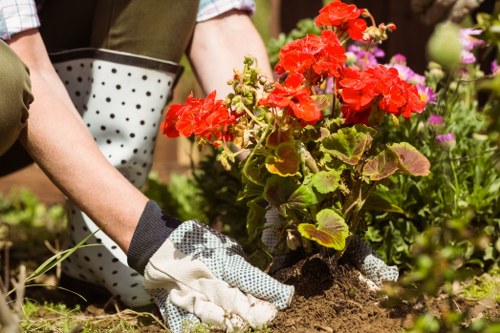
Many stump grinding jobs begin after a tree has been felled or reduced and the remaining base is left behind. In that situation, the stump can become the last obstacle before the garden is properly finished. The ground around it may already be settled, but the stump itself still interrupts mowing, planting and simple movement through the space. Grinding lets the visible timber be dealt with without turning the whole area into a digging project.
Where a tree has been removed as part of wider site clearance, it can be practical to combine stump work with other garden preparations. For example, customers sometimes compare the service with tree lopping and removal when planning a larger change to boundary planting or old trees. The useful point is not whether the work is large or small, but whether the remaining stump needs to be taken down far enough to stop it becoming a long-term obstruction.
After grinding, the hollow left behind usually contains a mixture of wood chip and disturbed soil. That material can often be left to settle, topped up or removed depending on the next stage of the project. If the end goal is a level lawn, new planting bed or paved section, the final finish should be considered before the work begins so the space can be left in a way that suits the planned use.
Access, site conditions and sensible planning
Good stump grinding depends on practical details as much as on the stump itself. The height and width of the stump, the position of nearby structures and the route to the work area all affect the approach. Narrow gates, steps, steep gradients and awkward corners may change which machine is suitable and how the job is completed. A clear description of the stump and its surroundings helps produce a more accurate quotation.
It is usually helpful to note whether the stump is in grass, borders, hard standing or close to buried services. If you are arranging several areas at once, a site with mixed surfaces may need a more considered plan than a single open patch. In some cases, a related service such as garden clearance can be useful before or after grinding if the area also contains loose branches, old timber or other debris that needs to be managed.
Two simple points often make the quotation process easier: first, confirm how many stumps need attention and roughly where they sit; second, mention any access limits, surface constraints or neighbouring features that could affect machine movement. That is usually enough for a sensible estimate without turning the enquiry into a long list of technical terms.
Tools, finish and practical results

Stump grinding equipment is chosen according to the size of the stump and the space available for working. Smaller units can be useful in tighter gardens, while larger machines are better suited to heavier timber and more demanding jobs. The exact depth of grind is also important, because a stump that is only partly reduced may still interfere with turfing or future planting. The finish should match the intended use of the space rather than aiming for a one-size-fits-all result.
Where a stump sits beside a lawn, one concern is how much surrounding turf can be preserved. Where it is in a border, the issue may be protecting nearby shrubs, edging or retained roots. If you are preparing for new grass, you may want to compare the result with lawn turf installation so the stump work and the later finish are considered together. That can help avoid leaving an area that looks cleared but still needs further adjustment before it is genuinely ready.
The practical outcome of a well-planned grind is a tidier surface with less visual clutter and fewer obstacles for everyday garden use. Some projects call for the stump to be reduced enough that it is no longer an issue at all; others only need it lowered so a new layer of soil or turf can bridge the area neatly. The right finish is the one that supports the next stage of the garden, not the one that simply removes the obvious timber and stops there.
About London
London is a large and historically layered city shaped by the River Thames and a long sequence of settlement, trade and rebuilding. Its central spine has been influenced by Roman foundations, medieval growth, Georgian terraces, Victorian expansion and the dense twentieth-century redevelopment that followed war damage and changing transport patterns. The result is a city made up of many distinct districts, each with its own character, yet connected by the same broad urban system of streets, parks, railways and river crossings. In the City and the West End, historic institutions sit alongside modern commercial buildings, while along the river there are embankments, wharves and regenerated stretches that reflect changing patterns of use. The capital’s museums and galleries are spread across several quarters, from South Kensington’s major cultural institutions to smaller collections and neighbourhood venues elsewhere. Open spaces also remain an important part of the city’s identity. Hyde Park, Regent’s Park, Hampstead Heath and Richmond Park are among the best-known, but many smaller commons, squares and local gardens shape everyday life too. Architecture ranges from timber-framed survivals and church towers to large civic buildings, railway arches, post-war estates and contemporary towers, giving the city a varied skyline at different scales. The Thames remains a defining feature, with bridges, piers, paths and riverside promenades linking parts of the capital that once relied heavily on waterborne trade. Local centres such as Camden, Greenwich, Westminster, Islington and Southwark each carry their own history while still contributing to the wider identity of London as a capital built from many overlapping layers.
Garden structures and finishing work

Once a stump has been ground down, the surrounding garden may still need finishing so the area blends back into the rest of the space. That can involve topping up soil, adjusting edging or planning the next step in the layout. Where the old stump sat near a fence line or boundary, it is worth thinking about how the surface will meet the structure once the timber is gone. Careful finishing helps the area look deliberate rather than simply disturbed.
In some gardens, stump grinding is part of a broader change that includes new borders, paths or screened boundaries. If the work forms part of a longer-term layout change, you may also want to consider garden fence installation as a related service for the same outdoor project. The benefit of joining these decisions together is straightforward: the stump can be removed with the later use of the ground in mind, instead of creating avoidable rework.
We also support situations where the old stump is one stage in a wider refresh of the outdoor space. That might include new planting, simpler maintenance or a more open access route through the garden. Request a quotation when you are ready to compare the work needed with the result you want to achieve.
Choosing the right follow-up for the ground
After grinding, the remaining area may need a different finish depending on how it will be used. If turf is going back in, the ground needs a fairly even profile. If it is becoming a planted bed, there may be room to leave more wood chip behind as part of the soil improvement plan, although that depends on the depth and the surrounding planting. If paving is planned, the preparation needs to be more exact, because old timber and loose material can interfere with a stable base.
For some projects, the best follow-up is a basic garden service rather than a major landscaping change. That is where services such as garden maintenance can be useful, especially if the site needs trimming, tidying or general upkeep once the stump is gone. The key is to match the post-grinding finish to the intended use, rather than treating every site the same.
It can also help to think about what should stay in place before the job begins. Nearby shrubs, low branches, edging stones and hard surfaces all matter because they influence both access and the final shape of the work. A sensible quotation will reflect those conditions, along with the number of stumps and the practical finish required.
Quotations, pricing factors and next steps
Stump grinding quotations are usually shaped by a few clear factors: stump size, number of stumps, access, the condition of the site and the finish needed afterwards. A stump that is easy to reach in an open lawn is generally simpler to assess than one tucked beside a wall, under low branches or through a narrow side passage. If the area also contains other debris, a separate tidy-up may be required, which can affect the overall scope of work.
Useful information for a quotation often includes the stump diameter, where it is located, whether there are nearby obstacles and what you want the ground to look like afterwards. A photo can help, but it is not the only way to explain the job. If you want to compare practical options before making a decision, our pricing and quotes page is a straightforward place to start. It sits alongside the service rather than replacing a proper job-specific estimate.
For a simple next step, send the stump details and ask for a quotation. If you already have a wider garden plan in mind, mention that too so the ground can be prepared with the next stage in view. Get in touch for a quote when you are ready to move forward.
Working safely around outdoor features
Stump grinding needs attention to surrounding features because a garden is rarely an empty worksite. Pipes, buried cables, paving edges, sleeper borders and retaining features can all influence the way the job is approached. Even where the visible stump looks straightforward, the practical setting around it may require a slower or more cautious method so the surrounding area is not damaged. That is especially important where the stump lies close to a wall or a managed planting scheme.
Some properties have spaces that are best handled in stages rather than all at once. In those cases, a clear discussion of the site helps decide whether one stump can be ground immediately or whether adjoining work should be completed first. For customers comparing related tree work, tree surgeon services may also be relevant where the stump is only one part of a larger tree management plan and the above-ground work still needs to be considered alongside it.
Safety is also about leaving the area in a state that can be sensibly used afterwards. Loose material should be managed, and the finished level should suit the chosen next step. That approach avoids the common problem of a stump being removed, but the space still being awkward to cross, mow or develop further.
Additional garden services around the stump
When a stump is removed from a larger garden project, it can sit alongside several other outdoor tasks. That might include tidying edges, clearing overgrown sections or preparing a new planting scheme. A service such as garden services can cover broader upkeep where the stump is only one element in a more complete refresh. Keeping the work joined up can be more practical than arranging each task in isolation.
If the site needs a more extensive tidy after tree work, it can also be sensible to compare stump grinding with garden clearance again, because some gardens require both the timber to be dealt with and the surrounding waste to be removed. That is not about adding unnecessary work; it is about matching the method to the actual condition of the space so the result is neat and usable rather than half-finished.
Whether the job is a single stump or part of a larger outdoor change, the important point is clarity. Tell us what is in place now, what should remain, and how you want the area to work afterwards. Request your quotation today and use the estimate to plan the next stage with confidence.